
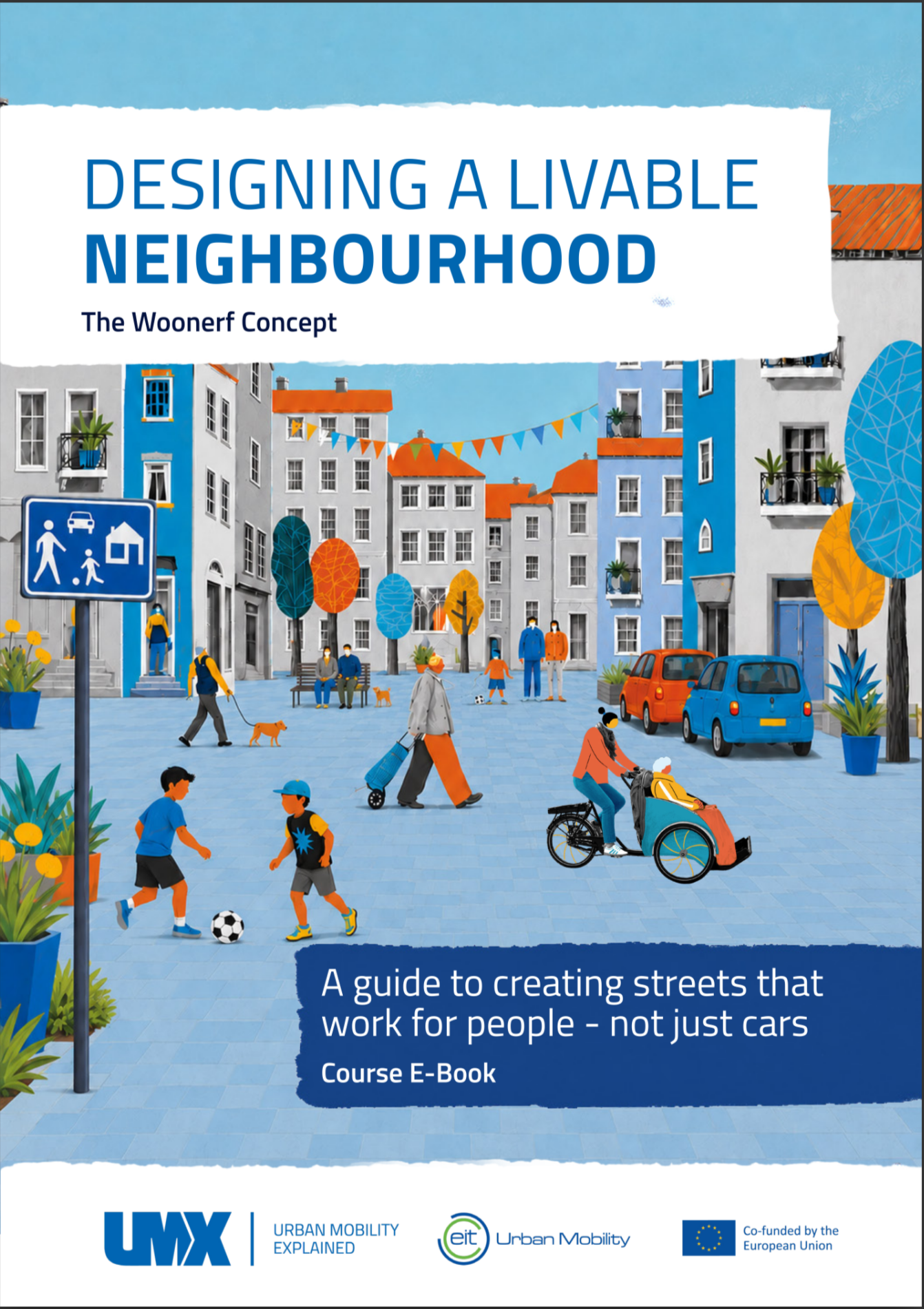
A guide to creating streets that work for people – not just cars
Streets are where everyday neighbourhood life happens: children play, neighbours meet, and people walk and cycle to local destinations. The way we design them can make more room for these activities while keeping homes accessible to vehicles.
This concise ebook, Designing a Livable Neighbourhood: The Woonerf Concept, introduces the Dutch approach to creating shared residential streets where people come first. Discover the origins of the Woonerf, the five design criteria behind it, and the legal framework that supports it. Whether you work in urban planning or want to improve your own neighbourhood, this resource offers a practical introduction to designing streets at a human pace. Available as a PDF in english, it complements the UMX online course with the same name.
What you’ll find inside the Woonerf ebook
A clear introduction to the Woonerf concept, supported by illustrated design examples, practical guidance, and a checklist to help you review a street design.
-
What is a Woonerf?
Discover how residents help inspire a different approach to residential streets, bringing walking, cycling, playing, and driving into a shared space.
-
The Woonerf in its urban context
Understand where a Woonerf fits within the wider street network and why surrounding traffic-calmed streets matter.
-
The five Woonerf design criteria
Explore slow speeds, shared surfaces, no through traffic, equalised intersections, and clear entrances—and how these principles work together.
-
The legal framework
Learn about the three areas highlighted in the ebook: pedestrian movement, speed limits, and parking, with examples of how rules vary between countries.
-
Putting the principles into practice
See how planting, paving, raised surfaces, and accessible pathways can shape a more welcoming street. Use the five-criteria checklist to reflect on your own design ideas.
Why you need this ebook
Urban mobility isn’t just about public transport and roads — it’s about access, opportunity, and the quality of everyday life. By reading this ebook, you will:
- Gain a framework for understanding mobility choices in your own city.
- Learn from real examples across Europe, Asia, and Latin America.
- Understand what works and what doesn’t in transport planning.
- Be better equipped to join debates, influence policy, or design change.
- Get a solid foundation before diving into advanced mobility topics.
Who is this ebook for?
- Professionals & policymakers working in urban mobility, planning, architecture, civil engineering, or public space.
- Students & learners studying urban planning, transport, or urban design.
- Activists & engaged citizens interested in making their neighbourhood streets more welcoming.
Why we think you will love it.
- Clear, accessible explanations that make the essentials easy to understand.
- Illustrated examples showing how design principles translate into street features.
- Attention to accessibility, greenery, and the social role of streets.
- A practical checklist to help you ask useful questions about a proposed design
Format and languages
Format: PDF, instant download after purchase
Pages: 27
Languages: English
Published:2026
Author: UMX e-courses team with Lior Steinberg support
Related courses
This ebook serves as a companion to UMX’s short online course Designing a Livable Neighbourhood: The Woonerf Concept

Reviews
There are no reviews yet.