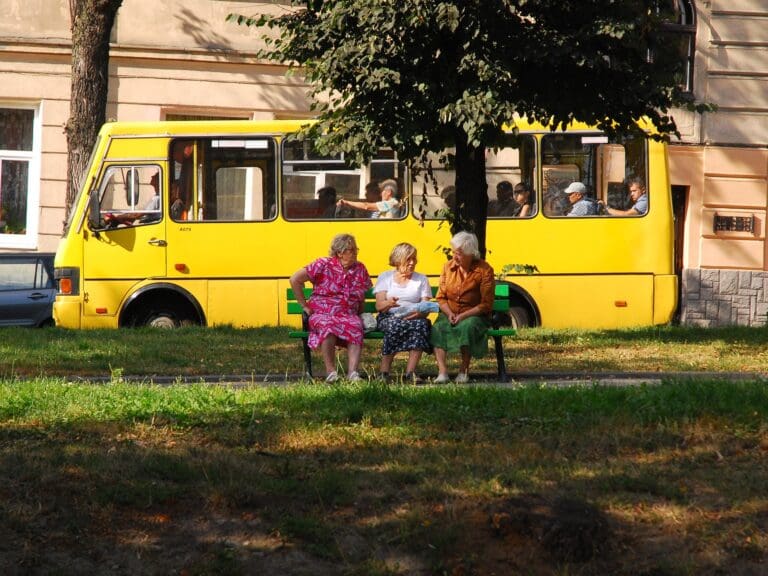
We’re often quick to point out when our urban infrastructure is getting old: We support new street designs with more space for walking and biking. We want easy access to new neighborhoods by bus and train. We also push for fixing old park benches.
Yet we often forget that we age, too, and our cities must adapt to demographic changes. Not only should we care for our ageing neighbours, but if we hope to grow old in our beloved urban environments, this affects us as well. We may not mind now if there’s uneven pavement or if we have to check our phones for the next train. When we turn 60, we may feel differently — and that’s what the course Urban Mobility for an Ageing Population: Introduction is all about. It’s one of three popular online courses that RMIT brought to EIT Urban Mobility in autumn 2025.
UMX caught up with Marta Fernandez, Executive Director of RMIT Europe and co-author of the course on ageing and urban demographics. Read on to find out what Marta had to say about how cities can start preparing for increasingly older populations. You might feel a little older (and wiser!) after hearing from her.
UMX: Most of our learners aren’t over 60 years old – at least not yet! So why is ageing a topic in urban mobility that we should pay attention to right now?
Marta Fernández: According to the World Health Organization (WHO), ageing and urbanisation are two of the biggest trends shaping the 21st century. People aged 60 and older are becoming the majority in many areas. This change affects housing, transport, and how public spaces are designed. Practical barriers persist: uneven pavement, step-overs at crossings, and confusing signs in complex transport hubs. Cities can adapt by using age-friendly design plans that focus on safe, accessible routes. They also need to ensure services are available at inclusive hours. Urban mobility must work for everyone, including those aging in place or visiting cities.
UMX: But isn’t it true that other urban mobility topics, such as accessibility and public space design, already address ageing and retirees? Why dedicate an entire course to this topic in particular?
Marta: Ageing intersects many domains beyond accessibility or public space. An aging population reshapes travel demand, care needs, and time-use patterns. These shifts impact land use, street design, and service delivery. Our standalone course addresses the specific, evolving challenges of ageing, such as new medication routines, mobility shifts after retirement, and the desire to stay connected to communities. It also fosters cross-disciplinary collaboration among planners, health and social care workers, and transport operators. The course unpacks how inclusive design, safety, and fair access work together to older people while still supporting other users. A targeted focus helps professionals anticipate age-related shifts and design resilient systems as demographics change. Additionally, urban mobility infrastructure that works for ageing people works for people with disabilities, parents with prams, and children. It is all about creating more inclusive spaces.
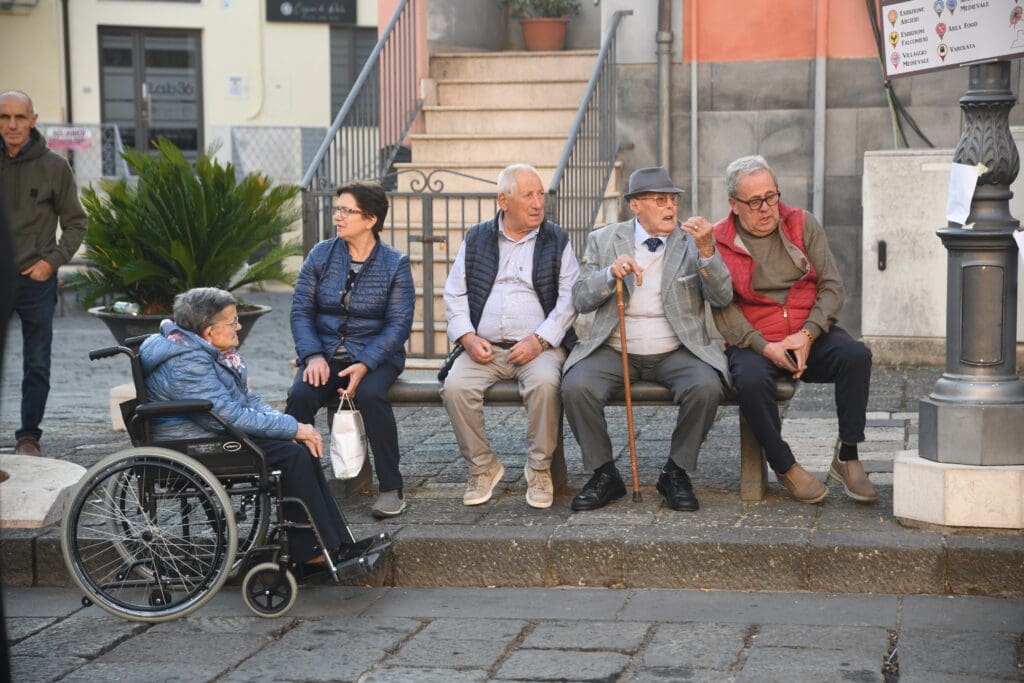
UMX: Who are we referring to, exactly, when we talk about ‘old’ people? Is age just a number, or is there more to it?
Marta: Good question! It is not about the number. It is about functional capacity, which increases with age, peaks as a young adult, and then declines with age. The good news is that this trend can be reversed at any age, depending on the environment and social context. People aged 65+ display a wide spectrum of mobility needs: some drive, some rely on walking, cycling, or transit; and some require assistive devices or supports. Economic factors, caregiving duties, and digital literacy also shape how people move through a city. Effective planning recognises this diversity and moves beyond a one-size-fits-all approach to one that leans on granular data and user-informed co-design with older residents. We need to treat ageing as a multidimensional profile, not a fixed age, to tailor mobility solutions that fit people.
UMX: How does ‘old’ age influence how people interact with urban space? What specific factors limit mobility later in life?
Marta: Older adults’ interactions hinge on balance, vision, hearing, cognitive load, and fatigue. Street design matters: curb ramps, tactile guidance, consistent lighting, and clear, legible way-finding reduce barriers. In addition, adjusting crossing times and implementing traffic calming measures can reduce risk while keeping mobility intact. Public spaces must accommodate mobility aids (walkers, canes, wheelchairs) and avoid trip hazards. The availability of nearby destinations (healthcare, groceries, social venues) reduces travel length and dependency on long trips. Safety perceptions on elements such as crime, lighting, surveillance also influence use of spaces at different times of day. Finally, social inclusion, community support, and affordable transport underpin mobility for older adults. Designing with their full spectrum of physical ability and cognitive performance in mind is critical to keeping them connected to city life.
UMX: Let’s pick one factor that you mentioned, perhaps one of the less obvious factors that limit mobility for older people. Tell us more about why it’s so important and why it’s often overlooked.
Marta: What often goes unnoticed is that older travelers can struggle with way-finding because of the cognitive load. Complex fare systems, multi-step transfers, or inconsistent signage can cause hesitation or delays, increasing travel time and making people less willing to travel. Simplified ticketing, clear station layouts, consistent visual cues, and staff support can dramatically improve independence. On-board information must be easy to access, with large-print maps, audible announcements, and real-time updates in plain language to help reduce confusion. Training for drivers and frontline staff to help older passengers enhances safety and comfort. The impact is greater participation in society, which supports independence, health, and well-being.
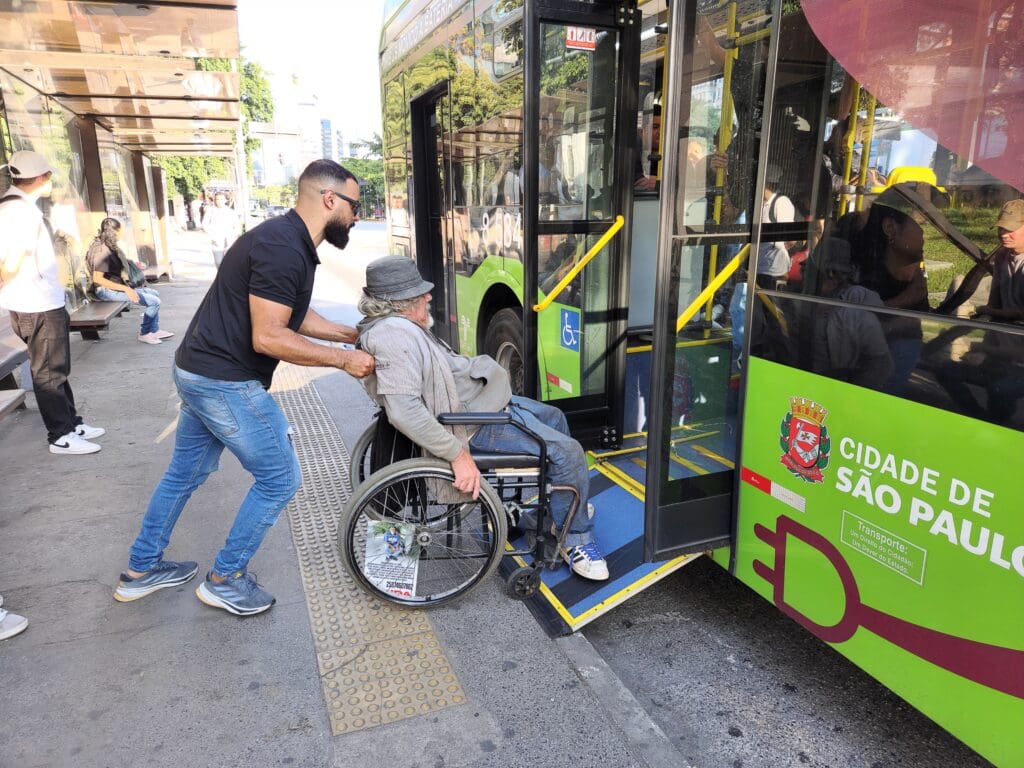
UMX: How does car use play into ageing populations? And what about public transport? Both seem to have advantages and disadvantages for older people. What are some general guidelines that planners can agree on?
Marta: Private cars are convenient but can become impractical with reduced vision, slower reaction times, or long-term health changes. They also create barriers for those who can’t drive or prefer not to because of safety concerns or cost. Conversely, reliable public transport must be accessible, with low-floor buses and trains, step-free stations, seating, clear signage, and reliable schedules. A balanced approach to reducing car use blends car-reduction strategies with enhanced public transport options and pedestrian-friendly streets. City planners and urban designers can set guidelines for cities to maintain core mobility corridors, ensure affordability and offer solutions for last-mile mobility.
UMX: What other factors make it easier for someone to ‘age well’ in a city? What performance indicators should cities consider for success among older people?
Marta: There are other social determinants of health that, together with access to public transport, are critical for overall urban health. These include access to nature, safety, proximity to facilities and shops, and social connectivity. Billie Giles-Corti’s work on urban health indicators emphasises that the broader built environment shapes health outcomes. This holistic view aligns with indicators such as walkability scores, access to parks, traffic safety, housing proximity to essential services, social participation rates, and access to healthcare. Digital inclusion remains important for access to services and information.
UMX: Which cities do this well? And conversely, without pointing fingers, what are some regions with a rapidly ageing population that require significant attention?
Marta: Some European cities excel at age-friendly planning. They have integrated transit, accessible nodes, compact, walkable cores, and high-quality pedestrian networks. Copenhagen, Stockholm, Bilbao, and Helsinki have invested in accessible public transport, age-inclusive housing, and social infrastructure to prevent isolation and reduced access to essential services. The emphasis is on proactive planning, community engagement, and funding for universal design. It’s not about blaming places. It’s about recognising where targeted improvements yield the biggest impact, and replicating best practices where appropriate.
UMX: As you mentioned, this perspective serves more than just older people. It connects with concepts like ‘mobility for all’. However, if planners have limited budgets and can only build some infrastructure, how can they avoid excluding older people?
Marta: Prioritise high-impact, low-cost measures. These include safer crosswalks, curb ramp upgrades, improved signage, and lighting on key routes to healthcare and grocery stores. Protect core transit lines and reliable service frequency even when expansion is limited. Pilot small-scale community-led mobility solutions, like volunteer driver schemes or on-demand shuttles serving seniors. Integrate housing and health considerations to create closer, walkable micro-neighbourhoods that reduce travel needs. Finally, ensure ongoing data collection on older residents’ needs so there is ready community involvement in planning when resources are constrained.
UMX: Maybe we are getting old: Is there anything we forgot to ask you? What should learners know about ‘Urban Mobility for an Ageing Population’? (Besides that the course is free and self-paced!)
Marta: The course offers practical steps for integrating age-friendly mobility into planning, not just theory. Expect examples, tools, and opportunities to engage with peers across sectors. It highlights inclusive governance, where older residents contribute to decisions about urban design. It’s self-paced, but uptake depends on applying learnings in real projects. Accessibility and mobility are basic lifelong rights.
Want to dive deeper into this topic?
Click here to check out our course Urban Mobility for an Ageing Population.

Adina Rose Levin
Adina Levin was born and raised in Chicago, and clocked in over 10 years in New York City before moving to Barcelona. As a freelance writer and creative strategist, she explores cities, culture, media and tech.

Marta Fernandez
Marta Fernandez is the Executive Director at RMIT Europe. She leads RMIT University’s European campus, focusing on securing research funding and developing international experiences for students from Melbourne and Vietnam.