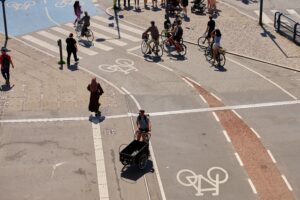
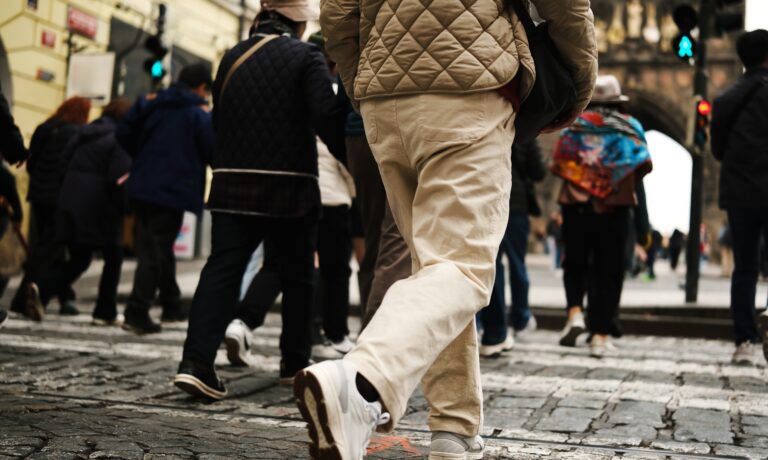
How easy is it for you to walk to essential places in your city? We mean the actual walking experience and the quality of the infrastructure, not just how close they are to your home. Even 15-minute cities aren’t walkable if the walk to work, school, or other frequent destinations feels like a trek instead of a stroll.
“Walkability is more than a method of transport,” said Melanie Davern, Professor of Public Health and Urban Planning, and Director of the Australian Urban Observatory at RMIT University, Melbourne. “It’s about how we live our everyday lives. How we get to places is very important for our physical health, mental health, social connections, and also city safety.”
Professor Melanie Davern co-authored UMX’s online course, Designing Walkable Cities, with her colleague, Associate Professor Lucy Gunn. Released on the UMX platform in autumn 2025, it quickly became one of its most popular courses.
What is walkability?
In public health and urban planning, Melanie explained, “walkability is understood as having:
- something to walk to (mix of land use and local destinations, including shops and public transport);
- a way to get there (street connectivity);
- and the people needed to support local destinations (dwelling density).”
This definition goes beyond transport, touching on urban planning and demography. Many popular books highlight walkability as key to cities’ success, making it a more technical term in recent years. According to Google Trends, interest in walkability and walkable cities surged in 2024. Yet cities have prioritised walkability throughout history.
“The first cities were highly walkable because they were compact, connected and complex with lots of different destinations, with planning focused around the central areas,” noted Melanie. “In towns and cities established long ago, it was also harder to travel long distances because people didn’t have access to private cars.” Walking was the only option for most people for millennia.
That changed as waves of migration brought more people to cities, and cars became more accessible. Melanie continued, “To accommodate growing populations, cities often grow on their edges. This sprawl results in greater distances to local destinations and a reliance on private vehicles.”
However, it would be unfair to reduce the issue to cars vs. pedestrians. Public transport and walkability go hand in hand. “People might not realise,” Melanie remarked, “that public transport stops are considered destinations that influence walkability. Access to them promotes walking and physical activity.” Melanie also continued to explain that “walkability is more than having a road network to walk along and destinations like local shops are a key reason to get people walking more”.
What are the benefits of walkable cities?
Studies show that walking can lower the risk of chronic age-related diseases, regardless of age. Add that to your daily commute and the benefits are manifold. But we didn’t need modern science to tell us that. Again, it’s back to the history books, as Melanie shared the following:
“I really admire Hippocrates, the early Greek philosopher. Not only is he considered the father of medicine and the Hippocratic oath, but he also said that ‘prevention is better than cure’ and that ‘walking is man’s best medicine.’ I even visited his hometown, Kos, in Greece, a few years ago. As a professor of public health and urban planning, I completely agree with him. He was a very clever man.”

Photo credit: Melanie Davern
This “medicine” extends beyond our bodies to our minds, communities, and planet. Walkability is linked to better mental health outcomes, social connectedness, and sustainability. (To find out more about these aspects of walkability, check out UMX’s free course on Designing Walkable Cities.)
The main features of walkable cities
Walkability relies on the three key ingredients that Melanie mentioned earlier: density, destinations, and street connectivity. Here’s another way to think about them:
- Infrastructure quality: Good infrastructure supports safe and easy movement. Well-made roads and public spaces create a reliable base for daily life.
- Connectivity: A well-connected area lets people reach important places easily. Direct routes and accessible design help everyone navigate public spaces better.
- Urban design and comfort: Urban design shapes how we experience a city. Smart planning creates welcoming and functional areas. Features like amenities, balanced land use, and pedestrian-friendly layouts make walking feel safe and enjoyable.
Measuring these criteria is easier said than done because there’s a personal aspect in the walkability experience in addition to the physical elements. Melanie argued, “Factors like footpaths, urban greening and shade, pleasant views or streetscapes aren’t traditional walkability measures but really should be. Later this year, we will be researching objective vs. subjective assessments of walkability, and it will be interesting to see the differences.”
As for cities excelling in walkability, the Designing Walkable Cities course showcases several examples, mainly in Europe. Melanie noted, “Many European cities are highly walkable, with close access to destinations, great medium density, and good street connectivity. Australia can learn from these cities, but planning should focus on walkable distances for everyone, not just the city centre.”
A foolproof way to improve walkability? Invest in a good footpath.
Melanie explained, “Footpaths are so important for age-friendly, child-friendly, and mobility-friendly cities. Footpath data is often very hard to access in spatial research, but anyone who has walked with someone with mobility issues knows the importance of footpaths for walkability. Our cities and towns should be walkable for everyone.”
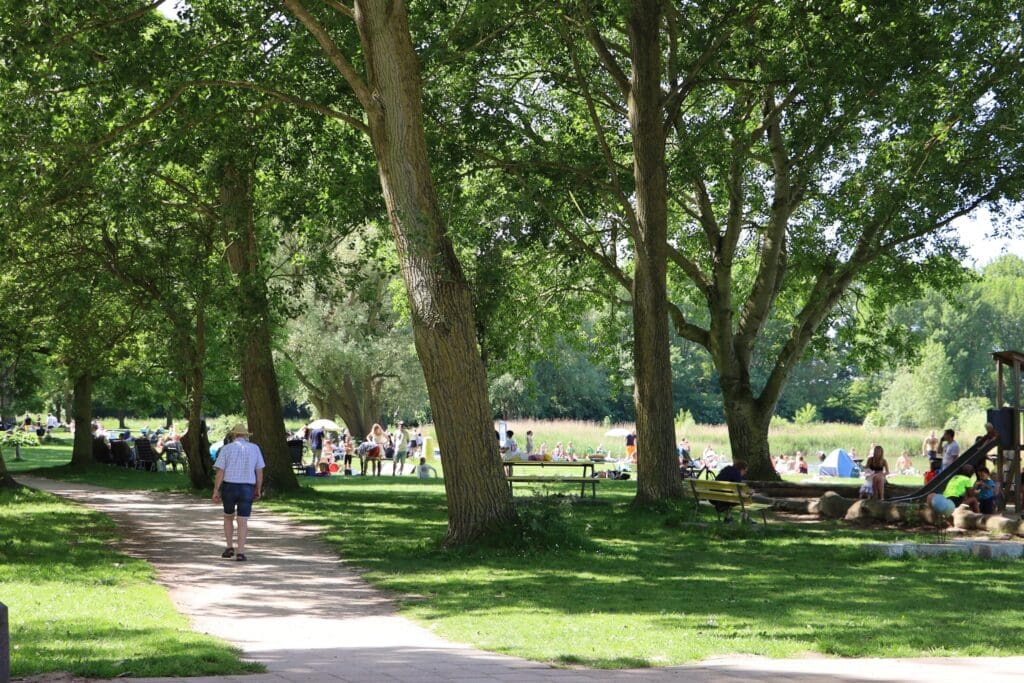
The future of walkability is hot, literally
What’s walkable today might not be tomorrow. Recent heat waves in Europe showed that even cooler cities need to think about shady routes and places to cool off. Melanie agreed, “With our changing climates, city planning needs to consider urban heat more. Street trees and greenery are essential. Their cooling, biodiversity, and health benefits are going to become even more important in the future.”
This hits close to home for Melanie and her colleagues in Australia, who have faced record-high temperatures and deaths attributed to heat in recent years. At the Australian Urban Observatory, they measure liveability at the neighbourhood level across 21 cities. She explained how last year they introduced a Heat Vulnerability Index based on “land surface temperatures, built environment factors that absorb and dissipate heat, as well as population factors associated with heat vulnerability.” As technological advances and data access make it easier to measure these factors, Melanie encouraged new research to focus on “the impact of climate change and extreme weather events on the walkability of the city.”
Walkability isn’t just a “nice to have” for cities; it’s vital to making them more liveable and sustainable. A walkable city is more resilient to climate challenges, and its residents enjoy better health, among many other critical benefits.
Want to dive deeper into this topic?
To learn more about this topic, check out UMX’s free course on Designing Walkable Cities authored by Melanie Davern and Lucy Dunn at RMIT University in Melbourne.

Adina Rose Levin
Adina Levin was born and raised in Chicago, and clocked in over 10 years in New York City before moving to Barcelona. As a freelance writer and creative strategist, she explores cities, culture, media and tech.